

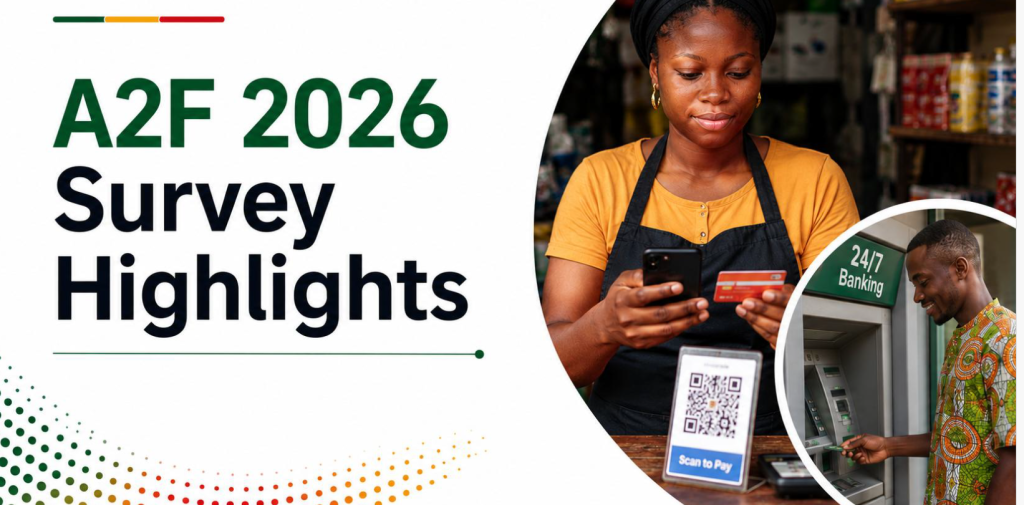
Imagine a small business owner who has a bank account, receives payments digitally and can access credit when cash gets tight. On paper, she is financially included.
But when a family emergency comes, business sales slow down or an unexpected bill arrives, she has little savings to fall back on. She borrows to cope, rather than to grow. Her account gives her access to the financial system—but not necessarily the financial security she needs.
Her experience captures an important message from EFInA’s Access to Financial Services in Nigeria (A2F) 2026 Survey: Nigeria has made significant progress in expanding financial inclusion, but access alone is not the same as financial well-being.
Today, 73% of Nigerian adults are formally included, while 64.4% use digital financial services. Yet only about 31% of formally included adults are financially healthy, and 70.1% report ongoing financial or welfare stress.
The next chapter, therefore, cannot be measured only by how many people have accounts or can transact digitally. It must ask a more important question: Are financial services helping people build resilience and improve their everyday financial lives?
The A2F 2026 findings point to the gaps that must now be addressed. Insurance reaches only 5% of adults, while 40.8% of formal borrowing is for coping or consumption rather than productive purposes. Meanwhile, 93% of formally included adults remain uninsured.
This is the opportunity before Nigeria: to move from financial inclusion as participation to financial inclusion as progress.
The goal is a financial system that does more than enable transactions—a system that helps people manage shocks, build businesses, protect their families, plan for the future and ultimately live more financially secure lives.
The next frontier of financial inclusion is not simply reaching more people. It is making financial inclusion work better for the people already within the system—and ensuring no one is left behind.